The fastest way to scale prospecting for advisors is stacking five channels around one niche, then engineering referrals as a repeatable system instead of a hope. Referrals and trigger-event intelligence are the two biggest multipliers: referrals still convert new clients better than any cold channel, and data tools like Bizminer flag events (a business sale, a leadership change, or a windfall) that tell you exactly when a prospect is ready to talk.
TL;DR:
- Focusing on a few high-yield channels like referrals, centers of influence, and trigger-event data yields the best prospecting results for advisors.
- Building a structured referral system with clear targets, scripts, and tracking increases the likelihood of sustainable client acquisition from warm introductions.
- Partnering with targeted centers of influence and establishing trust over time is more effective than quick hacks or broad outreach.
- Using AI-driven data tools to identify timing opportunities enhances prospecting efficiency, especially in niche markets with frequent transitions.
- Regularly reviewing and optimizing prospecting activities through a scorecard ensures consistent growth and prevents wasted effort on low-performing channels.
Table of Contents
- What Are the Best Prospecting Techniques for Advisors?
- How Do You Turn Referrals Into a Repeatable System?
- Should Advisors Build Partnerships With Centers of Influence?
- How Should Advisors Use LinkedIn to Attract New Clients?
- What Makes an Advisor Event or Webinar Actually Convert?
- Does Cold Outreach Still Work for Financial Advisors?
- How Is AI Changing Prospecting for Financial Advisors?
- How Do You Track and Improve Your Prospecting System?
- What’s a Realistic 30/90/180-Day Rollout Plan?
- How Do You Build Trust Before You Ever Make the Ask?
- Why Does Prospecting Discipline Beat Prospecting Talent?
- How Bizminer Supports Data-Driven Prospecting
- Sources
What Are the Best Prospecting Techniques for Advisors?
Not every channel deserves equal time. Here’s the ranked shortlist, matched to where you actually stand:
- Referrals — the highest close rate of any channel, best for advisors with even 20 to 30 happy clients already on the books.
- Centers of influence (COIs) — steady, low-cost lead flow; best for advisors willing to invest 6 to 12 months building trust with CPAs or attorneys.
- LinkedIn and digital outreach — scalable and compounding; best for advisors who can commit to weekly content.
- Events and webinars — high-intent leads in bulk; best for established RIAs with a list to invite.
- Data and AI-driven trigger events — the timing edge; best for advisors targeting a specific niche where windfalls or transitions are common.
- Targeted cold outreach — narrow and situational; only worth running inside a tight niche with a sharp hook.
A reasonable cadence: 10 to 15 prospecting touches per week, with a target of two to three qualified meetings booked from that activity.
How Do You Turn Referrals Into a Repeatable System?
Referrals aren’t luck. They’re a process with specific triggers, specific language, and a specific measurement loop. A 2026 survey found that referrals remain one of the most efficient lead channels, with a strong majority of successful client acquisitions tracing back to a warm introduction rather than any outbound effort.
Here’s the operating sequence that makes it repeatable:
- Set a written referral target (e.g., one qualified introduction per client per year) and track it in your CRM alongside client tenure.
- Ask at milestone moments — right after onboarding, immediately after delivering a financial plan, and during the quarterly review when a client expresses satisfaction out loud.
- Use a direct, specific script: “Who else in your life is dealing with a similar transition right now, like a business sale or an inheritance?”
- Track referred first meetings separately. Referred introductions typically close between 40% and 60% of the time, so any advisor not measuring this ratio is flying blind.
- Automate the reminder, not the ask. Set CRM tasks that flag the milestone moment, but keep the actual conversation human.
Pro Tip: Give clients a one-sentence description of your ideal client (“I work with retiring business owners navigating a sale”) instead of “anyone who needs a financial advisor.” Specific language is what clients actually repeat.
Should Advisors Build Partnerships With Centers of Influence?
Centers of influence, meaning CPAs, estate attorneys, and business brokers, generate some of the steadiest lead flow in the business, and they cost almost nothing beyond your time. The trick is treating the relationship like a partnership, not a lead-generation hack.
- Target selectively: look for professionals who already serve your niche client (small business owners, physicians, recent retirees) rather than generalists.
- Qualify before pitching: ask how they currently handle client referrals and whether they have a gap you can fill.
- Offer mutual value: co-host a webinar, trade a resource guide, or set up a formal reciprocal referral agreement.
- Run it as a pilot: give any new COI relationship 6 to 12 months before judging it, since trust between professionals builds slower than trust between advisor and client.
- Measure it: track referrals in and referrals out by source, not just gut feel about “how the relationship is going.”
How Should Advisors Use LinkedIn to Attract New Clients?
LinkedIn works as a predictable source of qualified conversations only when your profile, content, and outreach all point at the same niche. A profile that says “helping successful people” attracts nobody; a profile that says “helping tech executives manage concentrated stock positions” attracts the right ten people.
- Fix your positioning first: headline, About section, and featured posts should all name the specific client problem you solve.
- Post two to three times weekly, favoring specific client stories (anonymized) and one-page insight breakdowns over generic market commentary.
- Engage before you message: comment thoughtfully on a prospect’s posts for two to three weeks before sending any direct message.
- Use Sales Navigator saved searches filtered by job title, company size, or recent job change to catch prospects at the moment they’re most reachable.
- Track engagement-to-call conversion, not just follower count. A post that gets ten comments from the right ten people beats one with 500 generic likes.
What Makes an Advisor Event or Webinar Actually Convert?
A vague event (“Retirement Planning 101”) pulls a vague crowd who never becomes clients. A narrow promise, like “Tax Moves for Executives With RSUs Vesting in Q4,” filters for buyers before they even register.
The math that matters:
- Expect roughly 40% to 60% show-up rate from registrants, depending on how you set expectations.
- Of attendees, aim to book discovery calls with 15% to 25% within one week using a same-day follow-up email plus a personal call.
- Budget modestly, since a well-targeted virtual event costs a fraction of an in-person seminar and converts nearly as well when the topic is specific.
- Repurpose the recording into three or four short LinkedIn clips to extend the reach for weeks after the live date.
Does Cold Outreach Still Work for Financial Advisors?
Cold outreach only earns its keep inside a genuinely tight niche with a hook that lands in the first sentence. Generic cold calls to a purchased list waste time and invite compliance headaches.
- Target one specific trigger, such as executives with RSUs vesting this quarter, not “anyone with $500,000 in assets.”
- Open with something concrete in 15 seconds: “I work exclusively with tech employees managing RSU tax timing, and Q4 vesting creates a window most people miss.”
- Cap cadence at three to four touches across two weeks, then stop.
- Verify any prospect’s professional background against BrokerCheck before outreach, and confirm your firm’s compliance rules on cold contact and record retention.
How Is AI Changing Prospecting for Financial Advisors?
Intelligence-driven prospecting means using trigger events such as a business sale, a leadership change, an inheritance, or a job change to reach the right prospect at the moment they’re most receptive, rather than blasting a static list. Firms embedding AI and enrichment into their pipelines report higher-quality contacts and real efficiency gains for advisors preparing outreach and meetings.
Prudential Advisors used enrichment tools to add hundreds of data attributes per lead and route contacts automatically, giving advisors far more context before the first conversation than a name and phone number ever provided.
The practical setup: pair a third-party enrichment or market-data feed, something like Bizminer’s market data API, with CRM routing rules so trigger events land directly in an advisor’s queue instead of a shared inbox nobody checks. Guard against thin signals, though. A trigger event without context is just noise, and stale data ages fast in this game. Always confirm data freshness before treating an alert as gospel, and turn any market signal into a short, one-page note tied to a specific client action before the call, not a wall of raw statistics.
How Do You Track and Improve Your Prospecting System?
A scorecard turns “prospecting” from a vague intention into a measurable operation. Advisors who run five to seven channels in parallel with a written scorecard add 24 to 60 new households per year, largely because they stop wasting time on channels that quietly stopped working months ago.
| Metric | What to track | Healthy benchmark |
|---|---|---|
| Touches per week | Calls, messages, meetings requested | 10 to 15 |
| Meetings booked | From touches across all channels | 2 to 3 per week |
| Referral close rate | Referred first meetings that convert | 40% to 60% |
| Cost per qualified lead | Spend divided by qualified meetings | Varies by channel; track trend, not absolute |
| Channel ROI | Households gained per channel per quarter | Compare quarter over quarter |
Run the quarterly ritual like a real review: pull the numbers, kill the bottom one or two channels honestly underperforming, and reallocate that time toward whichever channel is already outperforming benchmark. Assign one person, even in a solo practice that’s you, to own updating the scorecard every quarter without exception.
What’s a Realistic 30/90/180-Day Rollout Plan?
You don’t need six channels running on day one. Build sequentially.
- Days 1 to 30: define your ideal client profile in one paragraph, set up CRM fields for referral tracking, and write your referral ask script.
- Days 31 to 90: pilot one COI relationship, host one small event, establish a LinkedIn posting cadence, and connect one trigger-event data feed.
- Days 91 to 180: scale whichever channel showed the strongest early conversion, document the process as a written SOP, and drop anything still underperforming at the quarterly review.
Pro Tip: Write the SOP as if you’re handing it to a new hire next month. If you can’t explain your referral ask in three sentences, it isn’t a system yet, it’s a habit only you can run.
How Do You Build Trust Before You Ever Make the Ask?
Every tactic in this playbook fails without groundwork. Prospects, especially the affluent ones advisors most want, rarely act on the first touch. They act after they’ve watched you demonstrate competence somewhere with no ask attached.
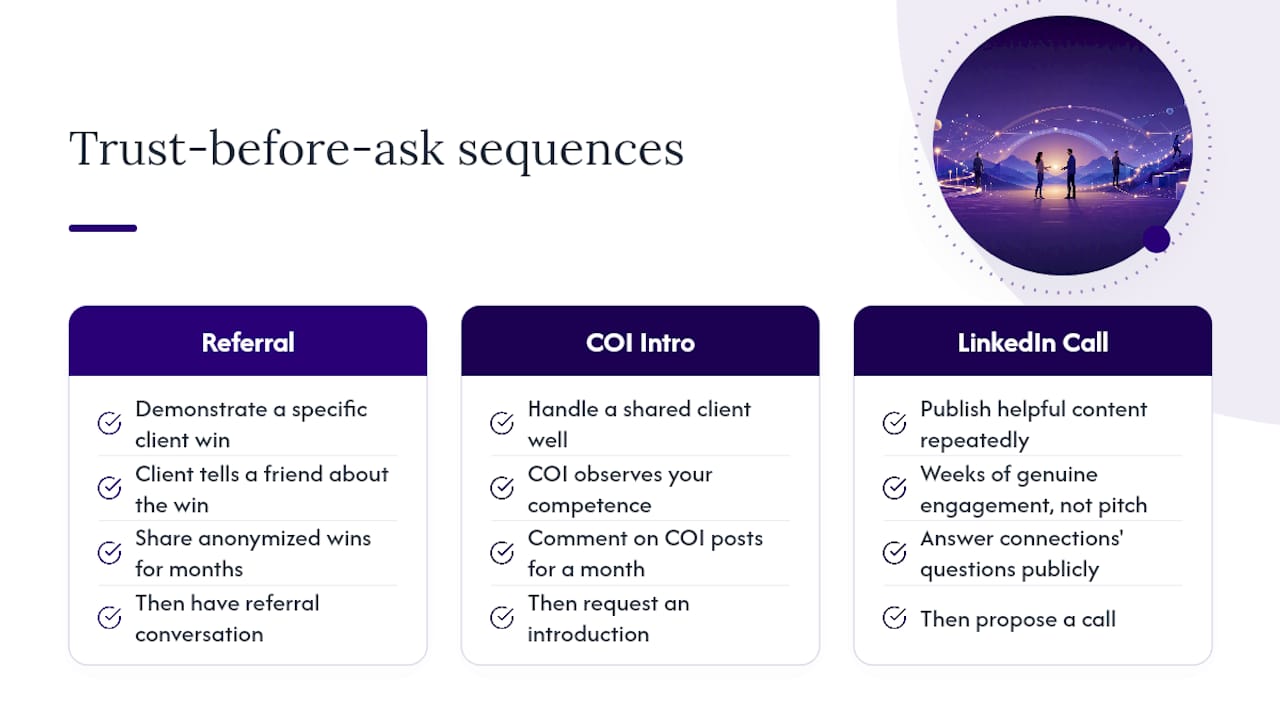
That means the sequence matters more than the channel. Before a referral conversation, a client needs to have already told a friend about a specific win, your plan, your responsiveness, a tax strategy that saved real money. Before a COI sends you anything, they need to have seen you handle a shared client well, or watched your content long enough to trust your judgment. Before a LinkedIn connection becomes a call, they need weeks of genuine engagement, not a pitch in their inbox on day one.
The advisors who struggle with prospecting for advisors almost always skip this stage. They treat outreach as a numbers game, more messages, more calls, more volume, when the actual lever is sequencing. Comment on a COI’s posts for a month before proposing coffee. Share a client win (anonymized) for months before ever mentioning capacity for new clients. Answer a LinkedIn connection’s questions for free, publicly, before ever sliding into their inbox.
This is also where objections dissolve on their own. A prospect who’s watched you for three months rarely asks “why should I trust you” the way a cold contact does; they’ve already answered it by watching how you handle other people’s questions. The relationship does the selling before your pitch ever needs to.
Why Does Prospecting Discipline Beat Prospecting Talent?
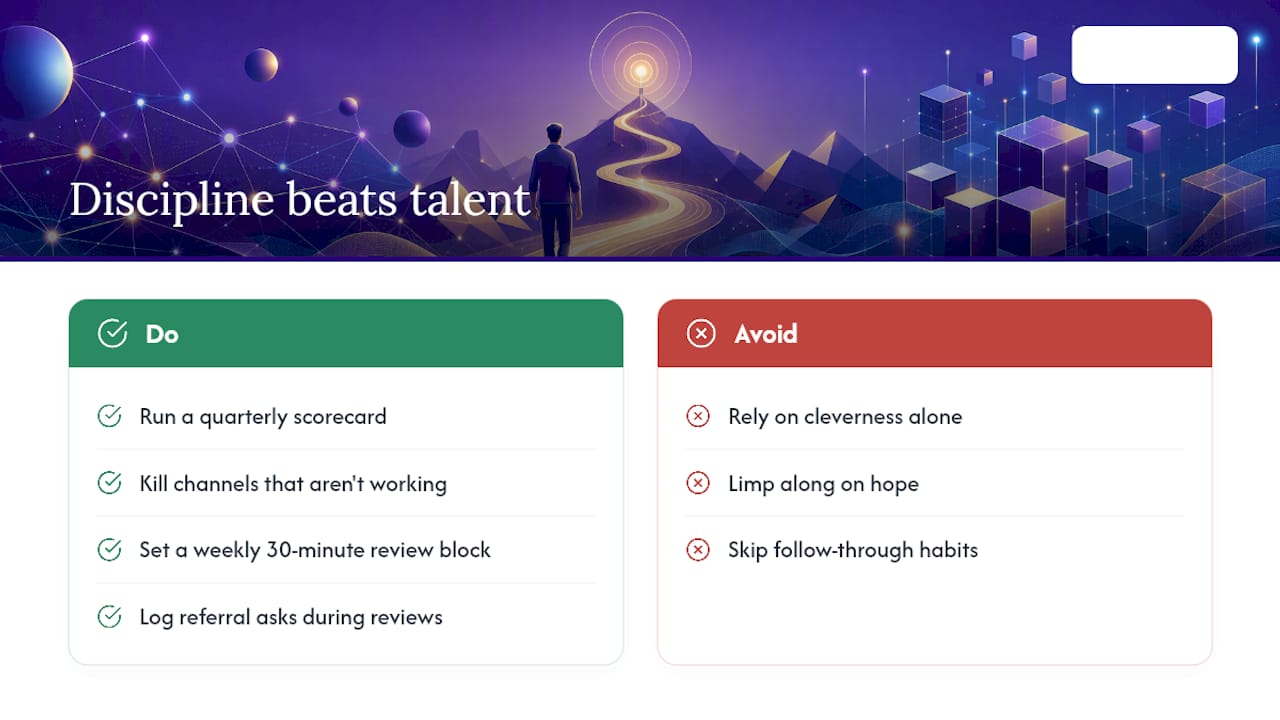
Most advisors don’t have a lead problem. They have a follow-through problem. The techniques in this playbook aren’t secret, referrals, COIs, LinkedIn, events, trigger data have all been public knowledge for years. What separates the advisors who grow from the ones who plateau is whether they actually run the quarterly scorecard and kill the channel that isn’t working instead of limping along on hope.
Set one weekly recurring calendar block, even 30 minutes, to review pipeline touches and log referral asks. That single habit outperforms most six-figure marketing budgets, because consistency compounds and cleverness doesn’t.
— Danny
How Bizminer Supports Data-Driven Prospecting
Bizminer gives you the concrete signal behind a trigger event instead of a hunch. Where most advisors guess at industry conditions, Bizminer’s granular market and industry research covers thousands of markets with financial detail, margins, growth trends, and competitive benchmarks, helping turn vague insights into specific, defensible conversation starters.
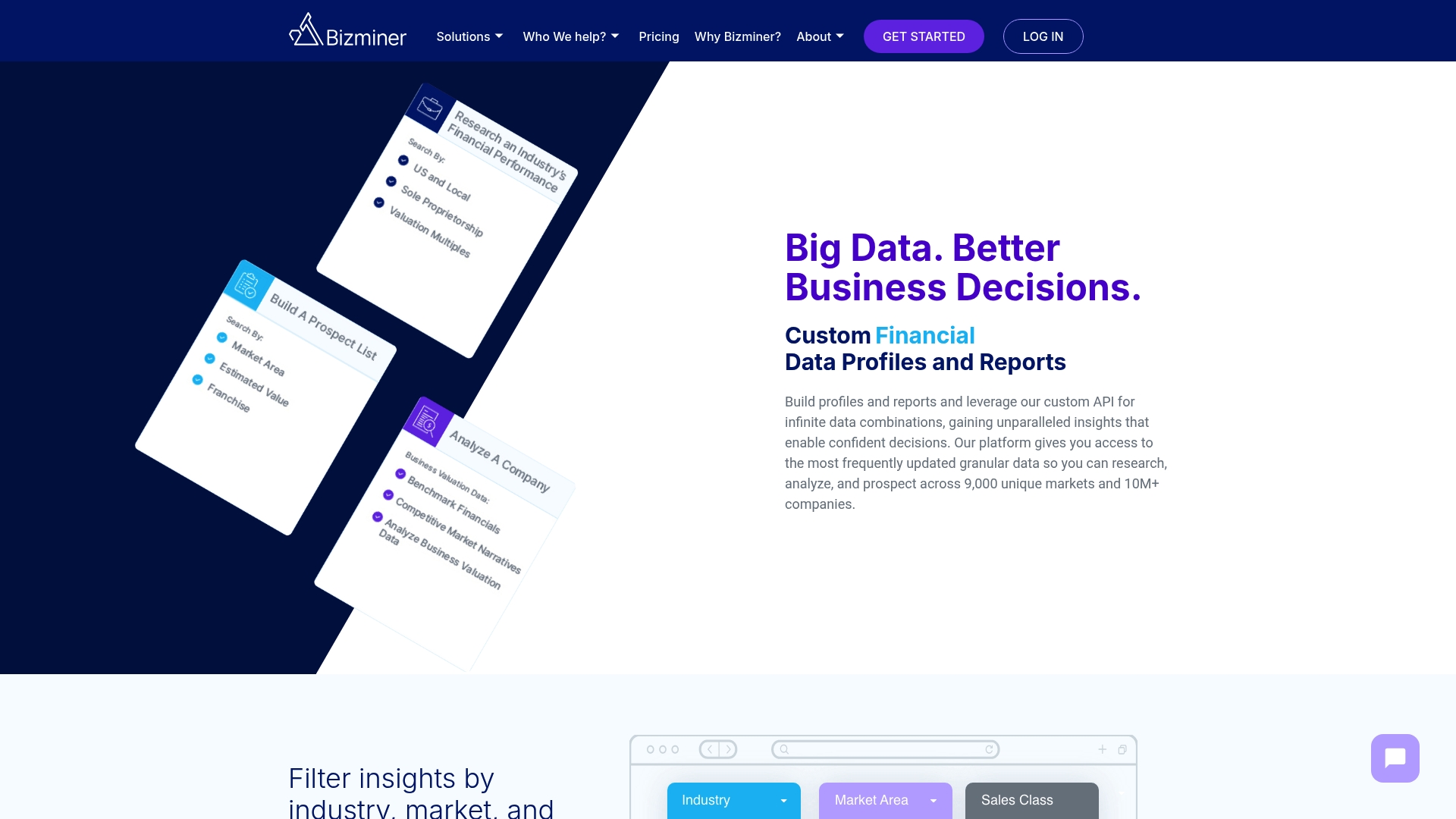
That specificity is exactly what a custom analysis report is built for: pull the numbers on a prospect’s industry before the first call, and walk in with a one-page insight instead of small talk. If you’re building the AI/data layer of your prospecting stack described above, consider using detailed research as a foundation. Request a custom report or explore market data available for your niche before your next round of outreach.
Sources
- Financial advisor prospecting ideas (SmartAsset) — 2026
- How AI is supercharging firms’ prospecting strategies (InvestmentNews) — Feb 9, 2026
- Turning market reports into meaningful client conversations (InsuranceNewsNet) — 2026-03-04