Start private company research with official filings: SEC Form D and EDGAR, state Secretary of State registries, and FinCEN’s Beneficial Ownership Information. From there, enrich and standardize what you find with licensed datasets. We build Bizminer around exactly this gap, providing the granular, court-accepted benchmarks that fill in what public filings leave out.
TL;DR:
- Use state registries for formation dates and status, Form D for exempt fundraising, and FinCEN records for ownership, checking access rules before relying on them.
- Form D is issuer reported and may miss offerings or reflect late filings, so cross check dates and amounts against press coverage or regulatory notices.
- Licensed datasets can add comparable financials, ownership trees, historical snapshots, and deal records, but academic access does not automatically permit commercial or client work.
- For a single company, test a custom report before buying a subscription; university portals suit broad research but often restrict commercial use and exports.
- Record each fact’s source, version, and confidence, then compare ownership aggregators with state filings because no single provider maps every corporate family accurately.
Table of Contents
- A taxonomy of private company data sources and when to use each
- How to use SEC Form D, state registries, and FinCEN BOI in practice
- What licensed private-market datasets provide and how to get access responsibly
- How to use university libraries and bulk datasets for research-scale access
- Step-by-step workflow to triangulate private company facts into a defensible profile
- Where Bizminer fits in a private company research workflow
- When to commission data versus triangulate it yourself
- Get granular private company benchmarks without the guesswork
- FAQ
- Sources
A taxonomy of private company data sources and when to use each
Private company research draws on several distinct categories, each suited to a different question.
- Public filings — (SEC Form D, EDGAR): best for confirming an exempt securities offering happened and who raised it; free, but only covers companies that filed.
- Beneficial ownership records — (FinCEN BOI): best for identifying individuals who own or control a company; access is restricted and governed by federal rule.
- Academic and library portals — (WRDS and similar): best for research-scale historical data; access usually requires institutional affiliation.
Each category answers a different question, and none answers all of them. A company’s formation date comes from a registry, not from a news article. Its funding history comes from Form D, not from a benchmark table. Matching the source to the question is the first skill in this kind of research, and it saves hours that would otherwise go into reading documents that were never going to contain the answer.
How to use SEC Form D, state registries, and FinCEN BOI in practice
These three public sources form the backbone of any private company profile, and each has a specific access pattern worth knowing before you start.
- Search EDGAR directly for a known issuer name, or download the quarterly flattened Form D data sets when you need to screen many issuers at once. The files break out into issuer, offering, and recipient tables, so you can filter by industry, state, or offering size without opening individual filings.
- Query the relevant Secretary of State for formation date, status, and listed officers. Some states go further: Kentucky’s Bulk Data Service lets subscribers download full business and UCC records with daily updates, which is useful when you are tracking many entities rather than looking one up at a time.
- Check FinCEN’s BOI guidance before relying on beneficial ownership data for a project. The FinCEN BOI pages describe who must report, what data elements are required, and how access works, and the rules here have shifted, so confirm current requirements rather than working from memory.
According to the SEC’s own FAQ guidance, Form D data is self-reported by issuers and may understate the true volume of exempt offerings, since not every eligible issuer files on time or at all. Treat these three sources as authoritative for what they actually certify, not as a complete picture. A company can exist, raise capital, and employ people while appearing in only one of the three, or none at all if it never triggered a filing requirement. Record where each fact came from as you go. That provenance trail is what turns a pile of search results into a profile you can defend later.
What licensed private-market datasets provide and how to get access responsibly
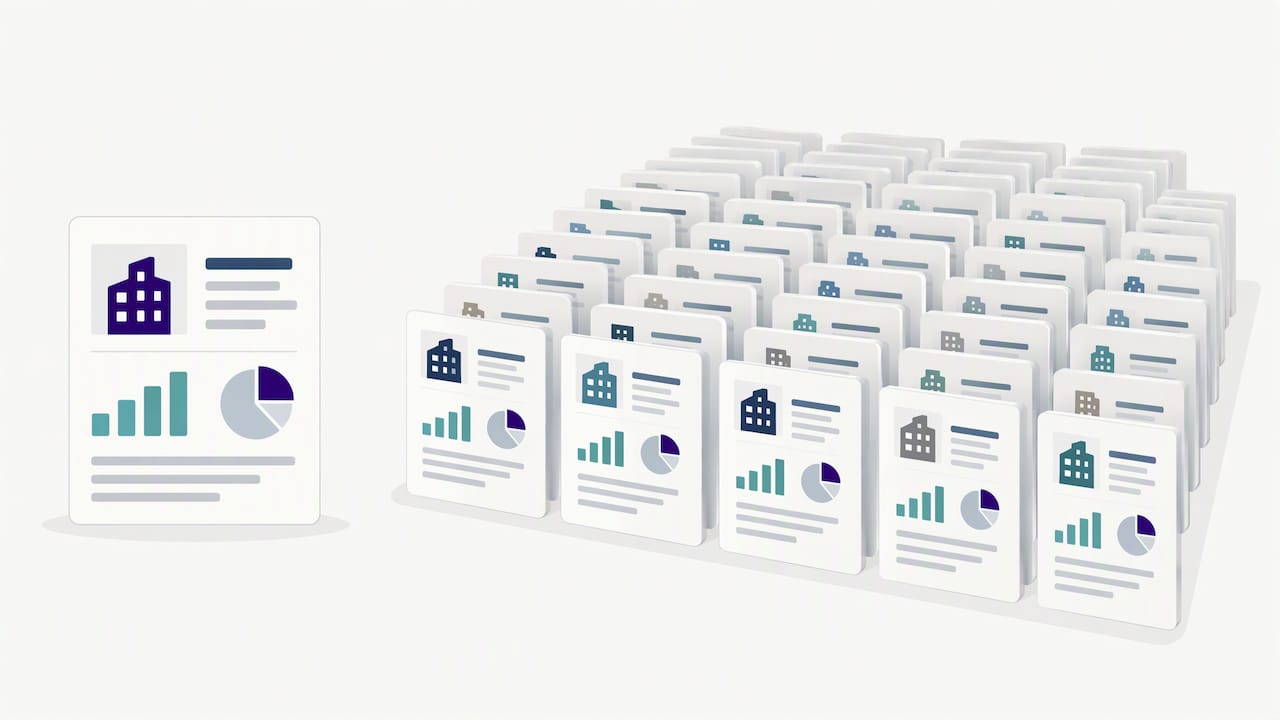
Public filings tell you a company exists and sometimes that it raised money. They rarely tell you what it earns, how it compares to peers, or how its ownership structure has changed over time. That gap is what licensed datasets are built to close.
- Standardized financials: revenue bands, margin estimates, and growth rates normalized across companies so you can compare them directly.
- Historical snapshots: year-over-year data that shows trajectory rather than a single point in time.
- Ownership trees: parent, subsidiary, and affiliate relationships that filings alone rarely map out clearly.
- Deal records and benchmark tables: transaction history and industry-level comparables for valuation work.
- API exports: structured feeds for teams that need to pull data into their own models or systems repeatedly.
Access to these datasets generally comes through an enterprise subscription, an individual seat license, or an institutional gateway like a university library. Before you rely on any of them for client-facing or commercial work, read the license terms. A dataset licensed for academic research is not automatically cleared for a paid advisory engagement, and the terms usually say so explicitly.
The decision to subscribe usually comes down to three questions: do you need historical depth that public filings cannot provide, do you need numbers that are directly comparable across companies, and do you need that data to hold up if someone audits your work later.
Pro Tip: Before committing to a subscription, test whether a single custom report answers your current question; it is often cheaper than a full license when you only need one company’s profile.
How to use university libraries and bulk datasets for research-scale access
When the need is research scale rather than ongoing commercial work, institutional access is often the more practical route. University libraries frequently carry subscriptions to platforms like WRDS, which bundles financial, market, and company datasets under a single institutional license.
- Request access through your library’s research services desk, which typically handles credentialing for WRDS and comparable platforms.
- Check the permitted use terms before you start, since WRDS and similar licenses often restrict output to non-commercial research and classroom use.
- Confirm the export format and limits in advance, as institutional datasets commonly arrive as tab-delimited or CSV files with caps on how much you can download per session.
This route works well for benchmarking across large samples of companies or building historical trend analysis, but it is the wrong tool for a one-off client deliverable that needs commercial clearance.
Step-by-step workflow to triangulate private company facts into a defensible profile
A defensible company profile rarely comes from one source. It comes from a sequence of checks that each confirm or challenge the last one.
- Verify legal existence first. Pull formation documents and current status from the relevant state registry, such as the Delaware Division of Corporations for companies incorporated there.
- Pull fundraising signals from Form D, then cross-check the dates and amounts against press coverage or regulatory notices to catch filing lags or errors.
- Fill in ownership and hierarchy using licensed datasets or library extracts, and note your confidence level for each relationship, since aggregated ownership data is rarely complete for every private entity.
- Estimate revenue and employee bands using industry benchmarks alongside alternative signals like job postings or supplier records, especially when no direct financial disclosure exists.
- Record provenance, version, and confidence for every data point you include, so the profile can withstand an audit or a client question months later.
Pro Tip: Keep a simple source column next to every fact in your profile. It takes seconds to add and saves far longer when someone asks where a number came from.
No single aggregator builds a complete corporate family tree on its own. Cross-checking an aggregator’s structure against state filings is still the most reliable way to catch errors before they end up in a client deliverable.
Where Bizminer fits in a private company research workflow
Once the public record and ownership checks are done, the remaining gap is almost always financial context: how a company’s numbers compare to its peers, and whether those numbers would hold up to scrutiny. That is the specific problem we built Bizminer to solve.
- Customizable financial reports across various market segments, differentiated by industry, geography, and company size.
- Company Profile, Financial Report, and Valuation Report products designed for specific research or advisory tasks.
- Prospect list tiers and API feeds available for teams that need to build target lists or pull benchmark data into their own systems.
Our data is supported by thorough documentation and sourcing, reflecting a high standard suitable for professional use. For an accountant building a custom financial report for a client, or an advisor assembling industry financial benchmarks for a valuation, that level of granularity is the difference between a rough estimate and a number you can stand behind.
When to commission data versus triangulate it yourself
In my experience reviewing how professionals actually approach this work, the deciding factor is rarely budget. It is consequence. In-house triangulation works fine for early screening, pipeline research, or low-stakes curiosity. Commission a licensed source once the output feeds a legal filing, an audit, a loan decision, or a transaction above a size that would hurt if the numbers were wrong. If you would need to defend the figure to a regulator, a judge, or a client’s board, buy the data instead of assembling it yourself.
— Danny
Get granular private company benchmarks without the guesswork
Public filings and registries answer the existence and fundraising questions. They do not give you a standardized revenue estimate, a peer comparison, or a ready-made prospect list, and that is where our reports come in.
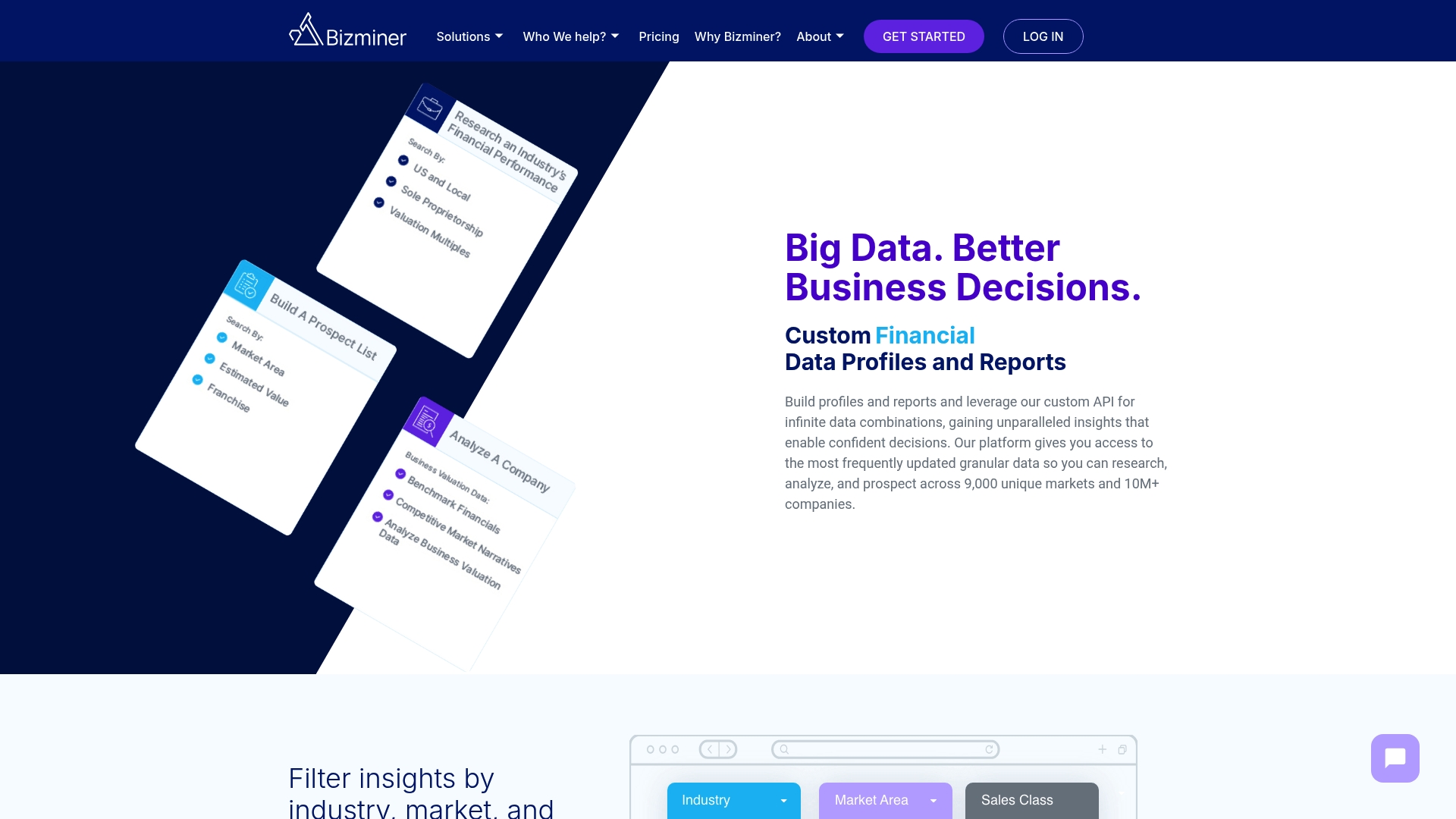
We build the following around the tasks described above:
- Company Profile, Financial Report, or Valuation Report for a single private company, priced per report rather than locked into a subscription.
- Tier 1, Tier 2, and Tier 3 Prospect Lists priced per record, for teams building outreach or research pipelines.
- Industry financial benchmarks across more than 9,000 markets, for advisors who need audit-ready comparables.
- Customizable API feeds for teams that want benchmark data flowing directly into their own models.
If you need a single report, check current pricing and order one directly. If your work calls for ongoing access or a custom build, reach out about a subscription or an API feed tailored to your research.
FAQ
How do you find financial information on a private company?
Start with SEC Form D filings on EDGAR if the company has raised capital through an exempt offering, then check state registries for formation and officer records. For standardized financials and benchmarks, a licensed report or database fills the gap that public filings leave open.
What are examples of the kinds of data used in private company research?
Common data types include formation and registration records, fundraising amounts and dates, beneficial ownership details, standardized revenue and margin estimates, employee counts, ownership hierarchies, and industry benchmark figures. Each type typically comes from a different source category rather than one single database.
What is PrivCo?
PrivCo is a commercial database that compiles financial and ownership information on privately held companies for research and deal-sourcing purposes. It represents one of several licensed private company data providers that professionals use alongside public filings and registries to build fuller company profiles.
Is beneficial ownership information from FinCEN publicly accessible?
Access to FinCEN’s Beneficial Ownership Information is restricted rather than openly public, and the rules governing who can request it have changed over time. Check the current FinCEN BOI guidance directly before relying on it for a specific use case.
Sources
Businesses typically combine SEC Form D and EDGAR, state Secretary of State registries, FinCEN’s beneficial ownership records, and licensed private market databases. Industry reports, trade press, and alternative signals like job postings round out the picture when direct disclosure is unavailable.
- Frequently asked questions and answers — Form D (SEC)
- Business — Bulk data service (Kentucky Secretary of State)
- Beneficial Ownership Information Reporting | FinCEN