A complete commercial underwriting dataset covers six categories: borrower identity and ownership, audited and projected financials, repayment sources and debt service coverage, collateral detail, guarantors, and facility-level covenants and maturity terms. None of that matters without auditable lineage, meaning every figure traces back to a source document, a date, and a documented transformation. The Comptroller’s Handbook ties this directly to examiner expectations. The Federal Reserve and FDIC hold the same line on model and vendor data.
TL;DR:
- Commercial underwriting data must include detailed source traceability for all figures, encompassing source documents, timestamps, and transformations.
- Fields related to maturity risk should record explicit maturity dates, balloon flags, and upcoming principal schedules beyond just current payment status.
- Validation of model or vendor data requires ongoing assessments of conceptual soundness, data representativeness, and thorough documentation of assumptions.
- AI tools excel at automating document parsing, anomaly detection, and routine tasks but still require human oversight for material credit evaluations.
- Building audit-ready datasets involves standardizing ratios, linking data to source documents, and providing industry benchmarks at NAICS-level granularity.
Table of Contents
- Core data fields and record structure for commercial underwriting
- How underwriting data drives approval and ongoing monitoring
- Refinance and maturity risk: the fields and checks that matter
- Model risk, vendor data, and governance for underwriting datasets
- AI and automation in commercial underwriting: uses and limits
- Building audit-ready underwriting datasets: a practical checklist
- Author perspective: quick priorities for credit teams
- How we help lenders build audit-ready underwriting feeds
- FAQ
- Sources
Core data fields and record structure for commercial underwriting
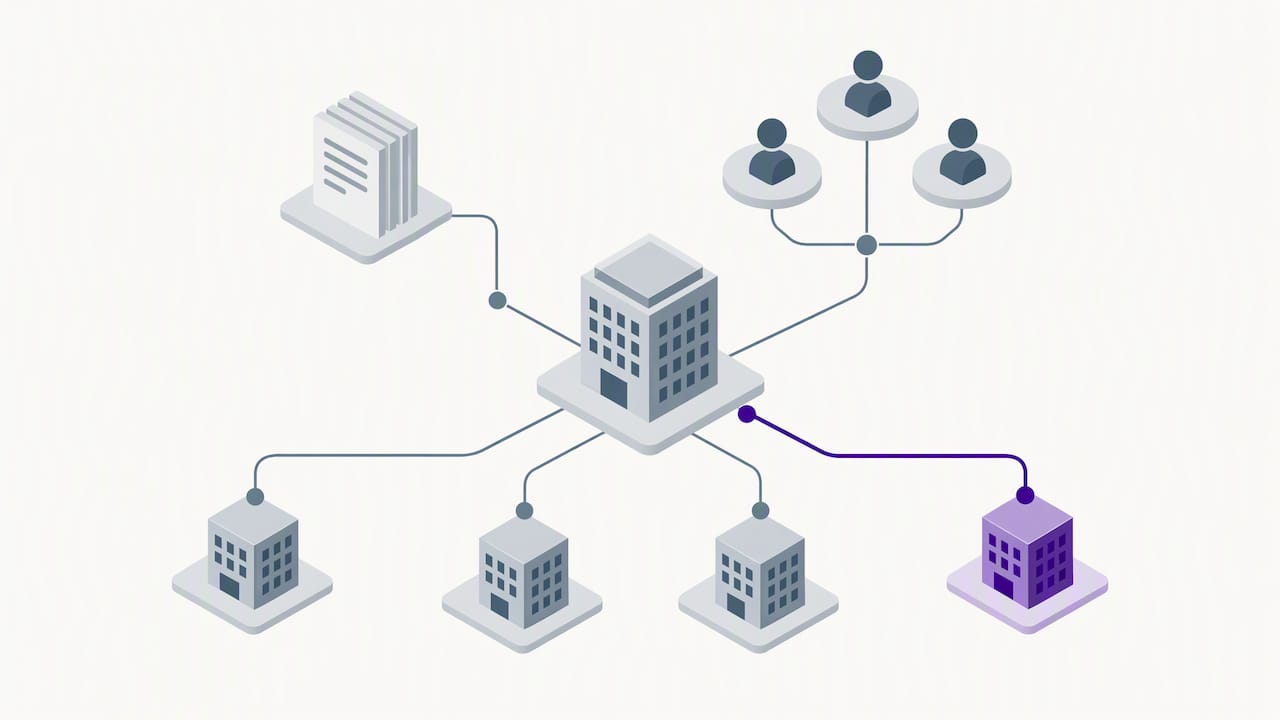
Borrower identity data starts with legal-entity mapping: tax identification numbers, beneficial ownership records, and a clear organizational chart for any borrower with multiple affiliates. Skipping this step is how underwriters miss related-party exposure that only surfaces after a default.
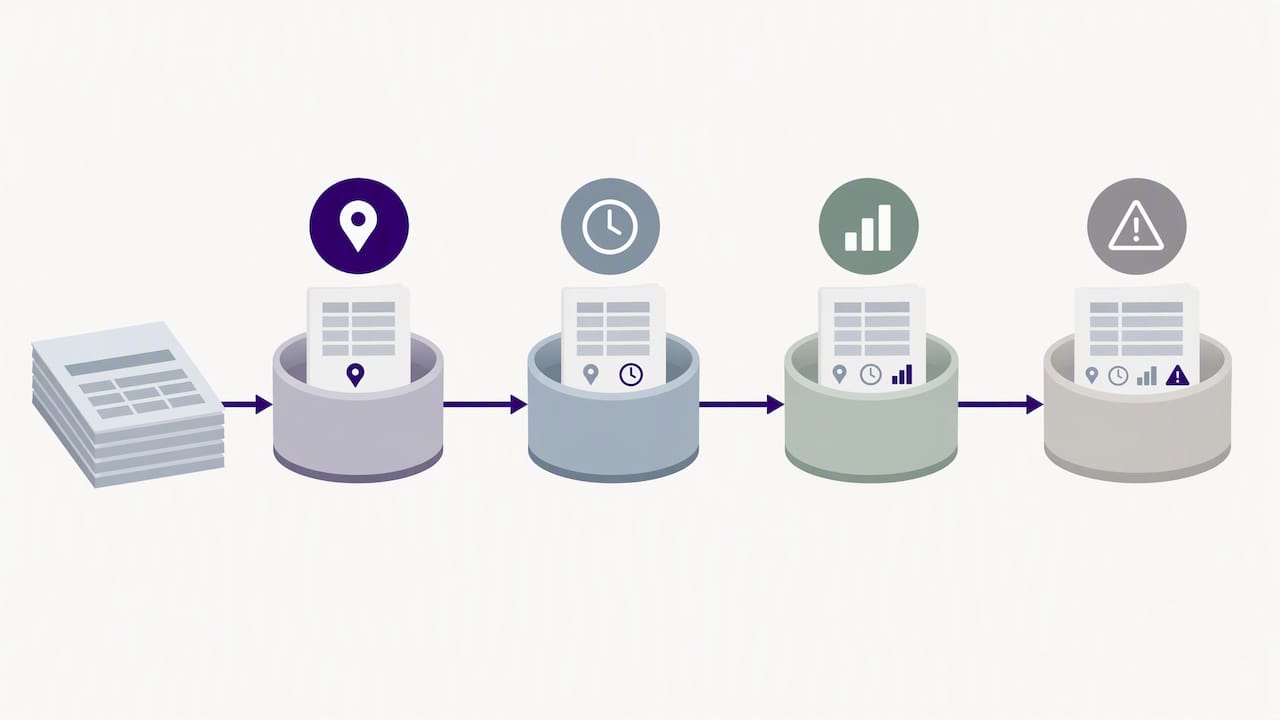
Financial inputs need more structure than most files give them. Audited statements, trailing 12-month figures, interim financials, projected cash flows, bank statements, and tax returns each carry a different reliability weight, and that weight should be recorded alongside the figure, not left to memory. Standard ratios, debt service coverage, times interest earned, and loan-to-value, should carry a timestamp showing exactly which financial period produced them.
Facility-level fields deserve their own table: maturity date, amortization schedule, interest-only flags, balloon exposure, tranche structure, and covenant thresholds with exception flags where a waiver has been granted. Collateral records need appraisal date and value, lien priority, lease schedules, and occupancy or vacancy figures for commercial real estate.
A workable data model separates these into normalized tables, borrower, facility, collateral, and covenant, each carrying a unique ID, a source ID, and a timestamp. A single audit field set, something like original_document_url, ingestion_hash, and transform_notes, turns a flat document pile into a traceable record.
- Borrower table: legal entity ID, beneficial owners, tax ID, relationship history.
- Facility table: maturity date, amortization type, covenant thresholds, exception flags.
- Collateral table: appraisal date, lien position, lease or occupancy data.
- Audit fields: source document link, ingestion hash, transform notes, decision date.
How underwriting data drives approval and ongoing monitoring
Underwriting data earns its keep twice: once at origination and continuously afterward. The same fields that support a first-pass risk rating also feed the monitoring routines that catch problems before they become losses.
- At origination, underwriters run rapid DSCR and LTV checks, stress covenants against rate and income scenarios, and generate an exception report flagging any policy deviation.
- During the life of the loan, automated covenant testing and watch-list triggers catch early signs of deterioration, feeding migration decisions toward nonperforming status when warranted.
- At the portfolio level, concentration dashboards track exposure by industry, geography, and loan size, surfacing clusters before they become systemic.
- For governance, back-testing model outputs against realized outcomes supports the outcomes-analysis work that feeds allowance and provisioning calculations.
The OCC’s commercial credit guidance frames this as a single continuous evidence chain rather than two separate processes, and that framing matters: a dataset built only for approval day tends to fall apart the first time an examiner asks for a year-two covenant history.
Refinance and maturity risk: the fields and checks that matter
Maturity risk hides in plain sight when datasets only record the current payment status. The OCC’s 2024 refinance-risk bulletin calls for tracking refinance exposure at both the transaction and portfolio level, which requires specific fields most legacy files skip.
- Explicit maturity dates, balloon flags, and upcoming principal schedules, not just the next payment due.
- Covenant headroom and alternative repayment sources in case cash flow falls short at maturity.
- Market liquidity indicators for the underlying collateral, since a thin resale market compounds refinance risk.
- Portfolio-level maturity-cadence heatmaps grouped into 12, 24, and 36-month windows.
- Concentration views by property type or industry, with remediation plans drafted ahead of near-term rollovers.
Multivariable stress testing, run at both the individual transaction and the full portfolio level, turns these fields into an early warning system rather than a year-end surprise.
Model risk, vendor data, and governance for underwriting datasets
A model or a vendor feed is only as good as the validation behind it, and responsibility for that validation stays with the lender regardless of who built the tool. The Federal Reserve’s model risk guidance requires conceptual soundness review, data representativeness checks, benchmark comparisons, documented assumptions, and ongoing outcomes analysis.
- Conceptual soundness: does the model’s logic match what it claims to measure.
- Data representativeness: does the training or reference data resemble the loans it will score.
- Benchmark comparisons against independent data sources or prior model versions.
- Documented assumptions and known limitations, updated whenever the model changes.
Vendor data brings its own obligations. The FDIC’s model-risk guidance expects provenance metadata, sample representativeness testing, permitted-use documentation, and a clear record of any customization overlay applied to third-party inputs. Operationally, that means a maintained model inventory, version control, independent validation separate from the team that built the model, and periodic performance monitoring built into the calendar rather than triggered only by an exam notice.
Pro Tip: Keep a one-page provenance sheet for every vendor dataset: source, refresh date, sample size, and known gaps, so a validator never has to chase that information down later.
AI and automation in commercial underwriting: uses and limits
AI earns its place in underwriting on repeatable, document-heavy tasks: parsing financial statements, automating spreading, flagging anomalies in submitted data, triaging files by risk, and drafting first-pass credit memos for human review. None of that replaces judgment on material credits.
- Document parsing and automated financial spreading cut manual entry time on routine files.
- Anomaly detection flags inconsistencies between submitted financials and historical patterns.
- Explainability matters for adverse-action notices, and fair-lending and bias testing need to run against the same training data the model uses.
- Human-in-the-loop review stays mandatory for material credits, with documented override reasons when a human disagrees with the model.
The FDIC’s Small Business Lending Survey found that larger banks lean on automated scoring more for smaller loans while preserving human judgment as exposure size grows, a pattern worth copying regardless of institution size. A hybrid model, fast automation for low-to-medium exposures and structured human review above that threshold, matches both the evidence and the regulatory expectation. For a deeper look at where automation fits and where it does not, see our guide to AI in underwriting.
Building audit-ready underwriting datasets: a practical checklist
An audit-ready dataset is one a validator or examiner can reconstruct without asking the underwriter to remember anything. That means source traceability on every field, NAICS-level benchmarks tied to the borrower’s actual industry code, timestamped transforms, standardized ratio definitions used consistently across the portfolio, exception-reporting fields built into the record, and API-ready formats so the data moves between systems without manual re-entry.
- Source traceability: every figure links to its originating document.
- NAICS-level benchmarks: industry comparisons use the borrower’s correct code, not a generic peer group.
- Standardized ratios: DSCR, LTV, and TIE calculated the same way every time.
- API-ready structure: records export cleanly into underwriting and monitoring systems.
Our industry financial benchmarks are built at NAICS-code granularity and provide a reference point for credit teams to cite in an exception report. An API feed can deliver those benchmarks in a format that maps straight into facility-level templates instead of requiring a manual lookup every time a file moves through underwriting. For a closer look at structuring data this way, our guide to audit-ready underwriting data walks through the field-by-field mapping.
Author perspective: quick priorities for credit teams
If I had to pick one lever for credit teams to pull first, it would be lineage, not novelty. Chasing new data sources without traceable sourcing just adds noise. Make maturity risk visible in every package, not just the ones already flagged, and let automation handle the repeatable work while outcomes monitoring stays mandatory for anything material.
— Danny
How we help lenders build audit-ready underwriting feeds
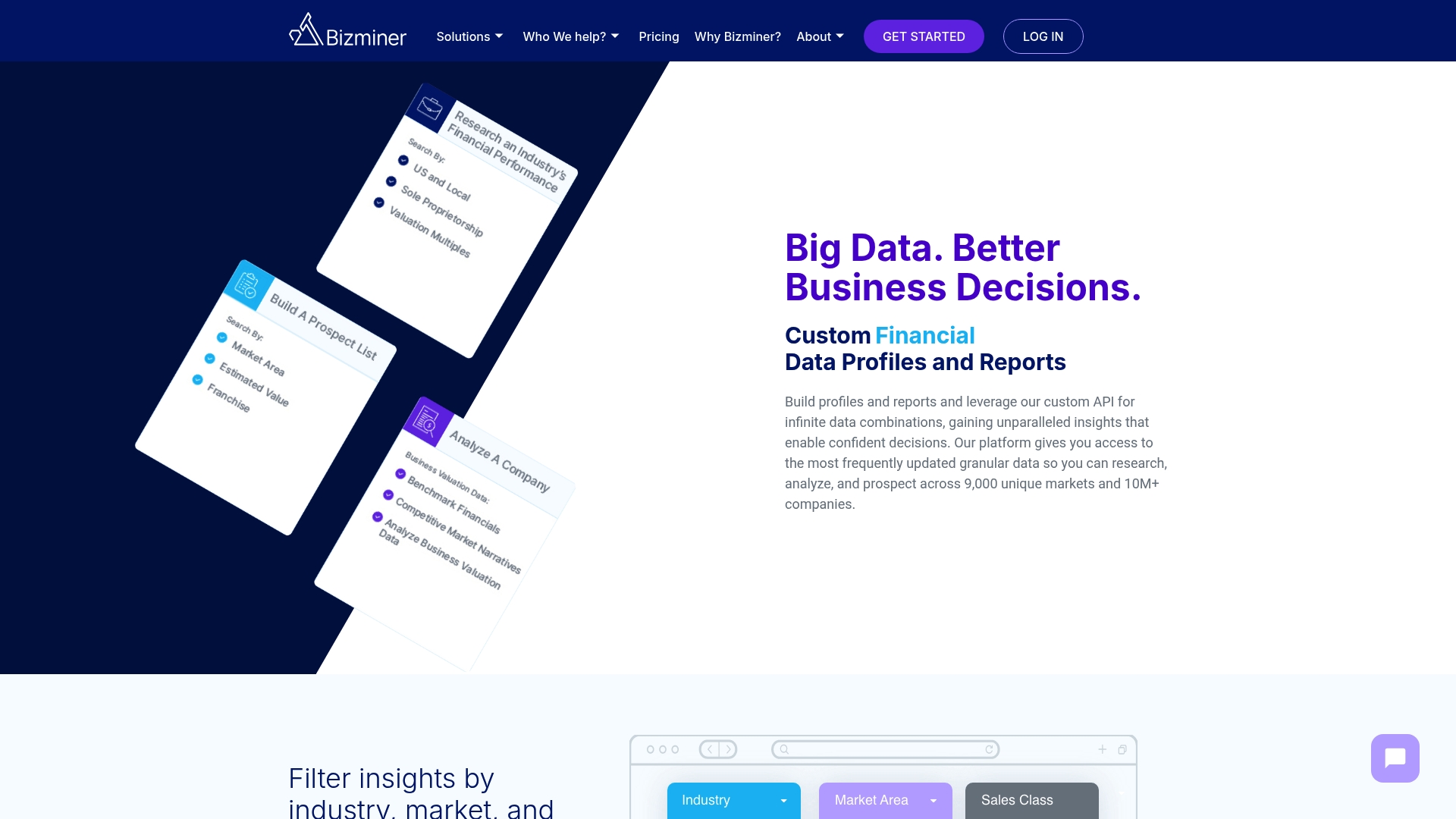
This platform addresses a common gap credit teams face: industry benchmarks granular enough to defend in an exception report and structured enough to drop straight into a facility template. The reports cover over 9,000 markets segmented by industry, geography, and company size, and an API feed delivers data in a format built for integration rather than manual re-entry.
- Pull a sample industry benchmark to see how NAICS-level granularity compares against your current peer group.
- Request pricing for a Company Profile or Financial Report to test against a live file.
- Evaluate an API feed mapping exercise against your existing facility-level template.
Start with our pricing page to see which report format fits the gap in your current underwriting stack.
FAQ
What is commercial loan underwriting data?
Commercial loan underwriting data is the full set of borrower, financial, collateral, and facility records a lender collects to assess credit risk and make an approval decision. It spans identity and ownership information, audited and projected financials, repayment sources, collateral detail, guarantors, and covenant terms, all of which must remain traceable to source documents for ongoing monitoring and examiner review.
What factors influence commercial loan underwriting the most?
Repayment capacity, measured through debt service coverage and cash flow analysis, carries the most weight, followed closely by collateral value and covenant structure. The Comptroller’s Handbook also points to industry and market conditions, loan purpose, and the borrower’s credit and relationship history as standard inputs examiners expect to see documented.
How does refinance risk affect commercial underwriting data requirements?
Refinance risk requires fields beyond current payment status: explicit maturity dates, balloon and interest-only flags, covenant headroom, and alternative repayment sources. The OCC’s refinance-risk bulletin recommends monitoring maturity concentrations and rate-sensitivity assumptions well before a loan approaches its maturity date, not only once it is near term.
Can AI replace human underwriters for commercial loans?
AI handles repeatable tasks well, document parsing, financial spreading, and anomaly detection, but it does not replace human judgment on material credits. The FDIC’s Small Business Lending Survey found that even large banks using automated scoring for smaller loans still rely on human review as exposure size increases.
What does audit-ready underwriting data look like in practice?
Audit-ready data links every material figure to its source document, ingestion date, and any transformation applied before it reached a model or memo. Our industry benchmark reports are built to that standard, with data that has been accepted in U.S. Tax Court as a reference point for defensible analysis.
Sources
- Lending and loan portfolio risk management (Comptroller’s Handbook)
- Supervisory guidance on model risk management (Federal Reserve)
- Supervisory Guidance on Model Risk Management (FDIC)